
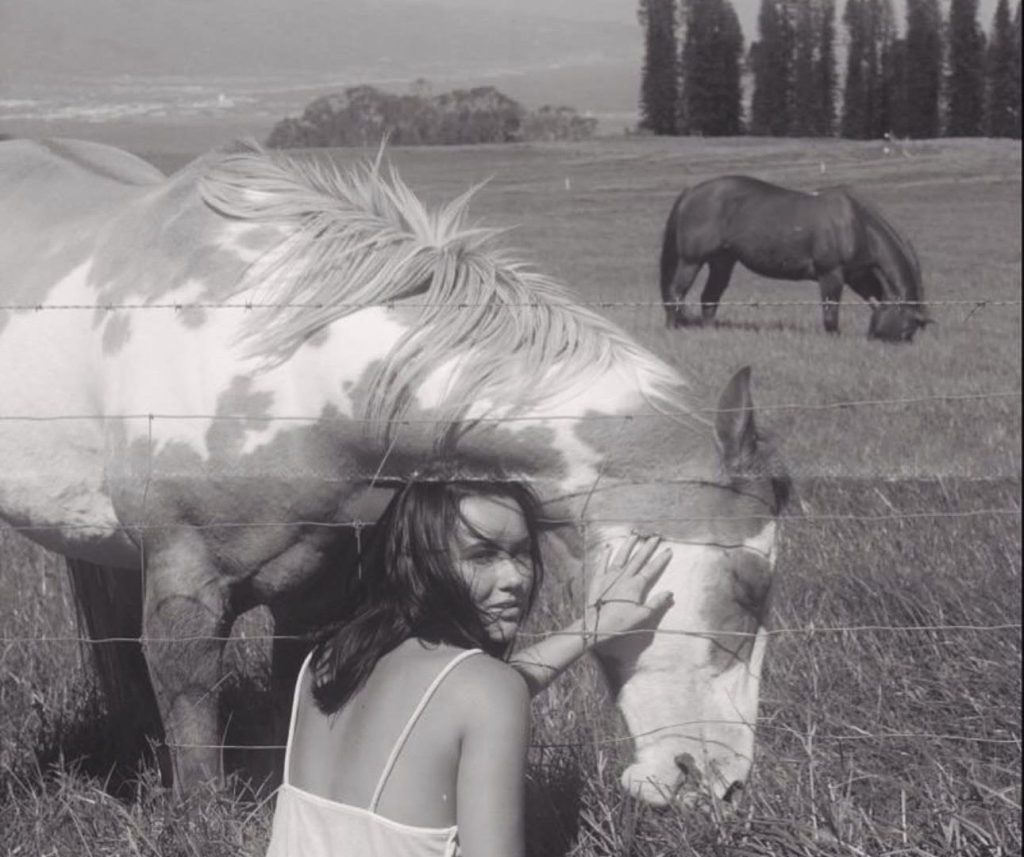
There is a difference between the North and the South.
Other than the bourbon and the better cigarettes.
It’s in the way a man carries the weight of his name.
A southern man was built by the land. It is in his blood, in the marrow of his bones, in the way his father taught him to stand firm even when the wind tried to take him down. He does not speak of struggle; he wears it. He does not ask for permission, he builds, he fights, he stays. His hands, thick with labor, grip the world with the same certainty that his grandfather did.
He believes in a different kind of wealth. The kind you can touch, the acres passed down, the sweat of his father soaked into the porch steps, the weight of a woman leaning into him as they sway to an old song no city man would know.
And she, she is not delicate. A southern woman is the quiet before the storm and the hurricane itself. She is the sting of whiskey and the comfort of a home-cooked meal. She does not wait for a man to carry her; she walks beside him, pistol on her hip, prayer in her pocket.
But the world is shifting beneath them.
A man can no longer raise cattle and expect to keep his land. The soil beneath his boots is being sold to men he will never meet, the borders of his world shrinking, his worth measured not in what he builds but in what he can buy. And suddenly, the cowboy is no longer the future; he is a relic, a museum piece in a country rewriting itself in the language of stock markets and skyscrapers.
Because in the city, a different kind of man has taken the reins.
His power is not in his hands but in his name, the way it echoes in rooms filled with men who shape the world with a signature. He does not build with sweat; he builds with capital. He does not inherit land; he buys it.
And the women of his world? They are sleek, sharp, untouchable. They do not bake; they book flights. They do not mend; they command. Their power is in their refusal to be owned, their value set by a world that rewards ambition, not sacrifice.
A southern woman is a problem for a city man.
She does not yield. She does not beg. She does not fall into his world with the softness he expects. She fights like her grandmother did, loves like her mother did, and stands like her father taught her. To him, she is either a fascination or a frustration, something to conquer or something to fear.
And so, the divide widens.
The cowboy looks at the city man and sees weakness, sees a man too afraid to get his hands dirty, too dependent on money that can vanish in a single crash.
The city man looks at the cowboy and sees a dying breed, sees a man too stubborn to evolve, too wrapped in a world that no longer exists.
And between them, the question lingers:
Can tradition survive without progress?
Can ambition exist without roots?
Can a man be both?
Because here is the truth, neither will speak
The cowboy is running out of land.
And the city man is running out of soul.
So what now?
Do we fight until the land is gone, until the cities collapse under their own weight? Do we stand on opposite sides while the world burns between us?
Or do we meet where the road turns to dust, where the sky stretches wide, where the sound of a deal closing echoes just as loud as a hammer hitting wood?
Cowboys, put your guns down.
City boys, put your greed aside.
And shake hands.
Because when the fire comes for this country, it will not ask whether you wore boots or a suit.
It will only ask whether you were man enough to rebuild.



 Champagne Confessions
Leave a reply to La Femme Noir Cancel reply